
The best time to visit Turkey depends on what you want from the trip, because the country is really several holidays in one. A morning ballooning over Cappadocia, an afternoon on a beach near Antalya and an evening on the Bosphorus in Istanbul all happen under very different skies. Weather, crowds, prices and swimming conditions each shift through the year, and UK school holidays add another layer for families.
This guide walks through Turkey weather by month, the pros and cons of each season, and the right timing for beaches, sightseeing, sailing and city breaks, so you can match your dates to the trip you actually want.
For most UK travellers, the best time to visit Turkey is from April to May and September to October, when sightseeing weather is comfortable and crowds are thinner. June to September suits beach holidays and brings the warmest seas. Winter works well for quiet city breaks, snowy Cappadocia and skiing, while November to March is generally the cheapest period.
Best Time to Visit Turkey by Travel Priority
| Travel priority | Best time | Recommended places |
|---|---|---|
| Overall sightseeing | April to May, September to October | Istanbul, Cappadocia, Ephesus |
| Beach holiday | June to September | Antalya, Bodrum, Marmaris, Fethiye |
| Family resort holiday | May to October | Antalya and the Turkish Riviera |
| Fewer crowds | November to March | Istanbul and major cultural sites |
| Cappadocia balloons | Spring and autumn | Cappadocia |
| Winter scenery | December to February | Cappadocia and mountain resorts |
Share your preferred month, UK departure airport, budget and holiday style with GenZ Travel. Our team will help you compare Turkey destinations and create a personalised package with suitable flights, accommodation and transfers.
Get My Turkey Holiday QuoteTailor-made options for beach holidays, families, couples, honeymoons and multi-centre Turkey trips.
Turkey’s Climate and Regional Weather Explained
One national forecast cannot describe Turkey, because the coast, the interior and Istanbul sit in different climate zones. Antalya and the southern coast have a classic Mediterranean climate: hot, dry summers and mild, wetter winters. Snow on the beach is almost unheard of, and locals still stroll the sand in January.
Istanbul is more changeable. Summers are warm and sometimes humid, winters are cold and grey, and rain is common from late autumn through early spring. Snow falls most years. Cappadocia sits inland on a plateau above 1,000 metres, so it swings hard between seasons: hot days and cool nights in summer, and genuinely cold, often snowy winters where nights can drop below freezing. Eastern Turkey is colder still, with short summers.
When you plan, separate five things that people often lump together: air temperature, sea temperature, rainfall, humidity and daylight hours. The sea lags behind the air by several weeks, so September often swims warmer than June even when the air feels similar. Treating any single figure as “the temperature in Turkey” is the fastest way to pack for the wrong trip. Discover the country’s top cities, coastal resorts and cultural attractions in our guide to the best places to visit in Turkey. Timing your trip for the coast? Pair this with our antalya attractions guide to plan your days.
Turkey Weather by Month
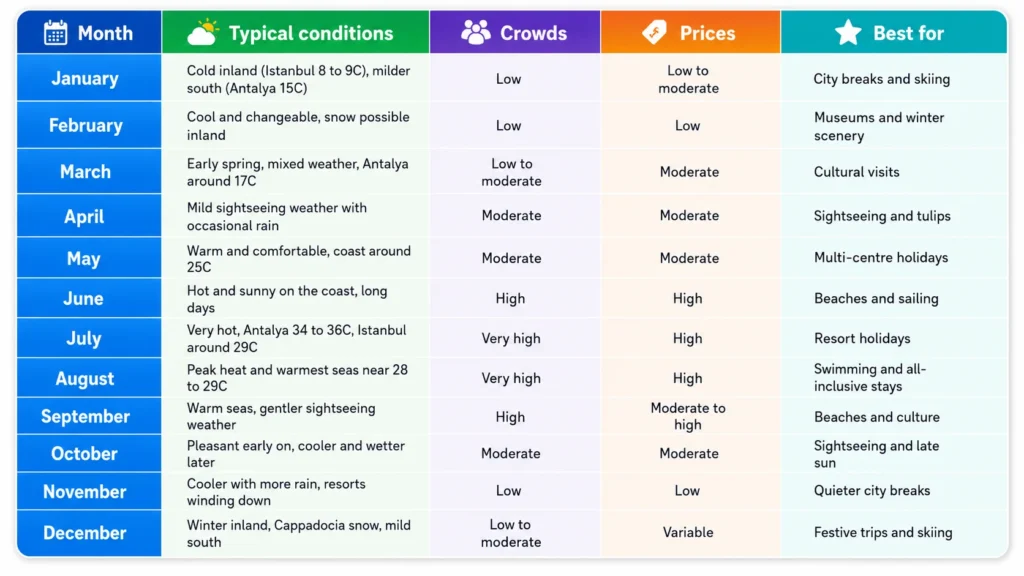
Here is Turkey weather month by month at a glance, with the regional differences that matter. Temperatures below are typical daytime highs and vary by area, so treat them as a guide and check current forecasts before you travel.
Turkey in January
Turkey weather in January is cold in Istanbul and central Turkey, with possible snow in Cappadocia. Antalya is milder but less dependable for sun. Beyond ski resorts, visitor numbers are low and some coastal hotels reduce services, which makes it a month for museums, city sights and winter landscapes.
Turkey in February
February stays wintry, with snow still likely inland and low demand in the big cities. It is a good time for indoor culture and a traditional hammam, but not a dependable beach month anywhere in the country.
Turkey in March
March is a transition month: unpredictable rain, gradually warmer days and cooler evenings. Early spring sightseeing is pleasant, and crowds are lighter than April and May, so historic sites feel calmer.
Turkey in April
April brings comfortable sightseeing temperatures, greener landscapes and Istanbul’s tulips. Rain still passes through, and Easter plus UK school holidays lift demand, so book ahead. Pack layers and a light waterproof for Istanbul, Ephesus and Cappadocia.
Turkey in May
May is one of the strongest all-rounders, with warm days short of high-summer heat and coastal hotels fully open. It suits couples and families, sea temperatures are climbing, and outdoor sightseeing is far kinder than July or August.
Turkey in June
June opens the main summer season with hot, sunny coasts and long daylight hours, ideal for swimming and sailing. Prices and demand rise, but conditions are more comfortable than the peak August heat.
Turkey in July
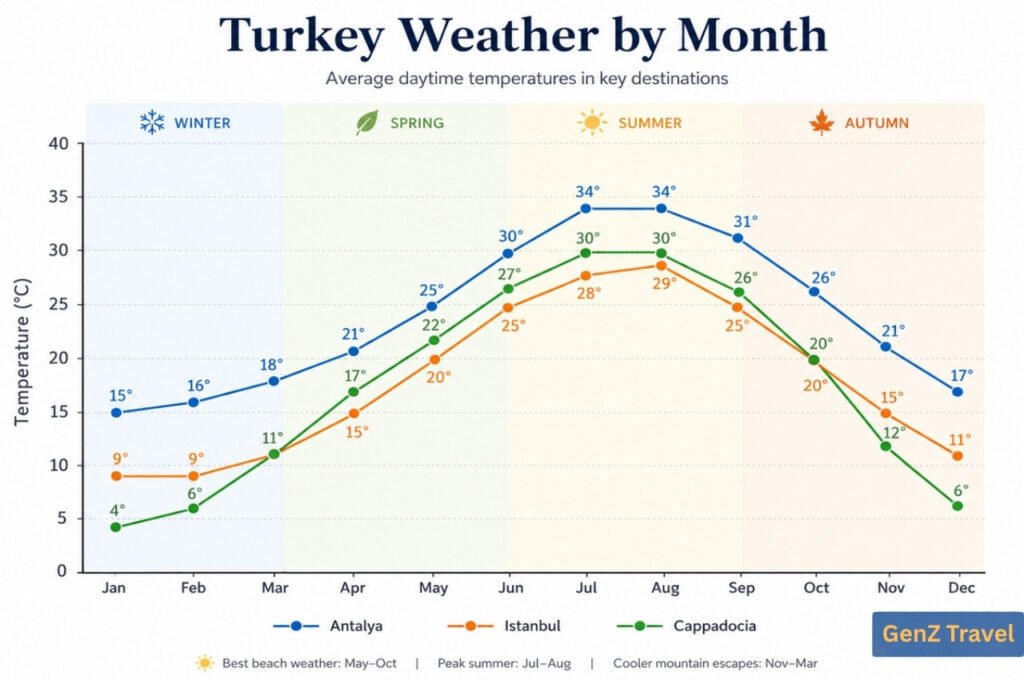
The temperature in Turkey in July peaks, with Antalya often in the mid-30s while Istanbul and Cappadocia sit nearer the high 20s. Resorts and attractions are busy, so plan archaeological visits such as Ephesus for early morning and lean into all-inclusive resort days.
Turkey in August
August is among the hottest and busiest months, with the warmest seas of the year and peak demand from UK families. Flights and hotels cost more, so book early and take heat precautions for young children and older travellers.
Turkey in September
September keeps warm seas but eases the sightseeing heat, making it excellent for couples and multi-centre trips. Resorts and excursions still run, and value often improves once the main school-holiday rush has passed, which is why it pairs Istanbul, Cappadocia and Antalya so well.
Turkey in October
Early October stays warm on the southern coast, with swimming still realistic around Antalya, then rain becomes more likely and mornings cool. UK October half-term lifts family demand, but historic sites are quieter than in summer.
Turkey in November
November turns noticeably cooler, with more rain in Istanbul and some coastal areas and seasonal beach services winding down. It is a month for cultural trips and city-break value rather than resort sun.
Turkey in December
December brings winter inland and possible Cappadocia snow, while the southern coast stays comparatively mild. Istanbul fills up around Christmas and New Year, ski season begins in the mountains and daylight is at its shortest.
Considering destinations beyond Turkey? Explore our tour for a city-and-beach alternative.
Best Time to Visit Turkey by Season
If you think in seasons rather than single months, the trade-offs get clearer. Here is how spring, summer, autumn and winter compare.
Spring: Mild and Green
March to May
Comfortable walking weather, wildflowers and moderate crowds make spring ideal for Istanbul, Cappadocia, Ephesus and Pamukkale. The catches are occasional rain, cool evenings and higher prices around Easter.
Summer: Beaches and Resorts
June to August
The best season for traditional coast holidays in Antalya, Bodrum, Marmaris, Fethiye and Alanya, with hot weather, warm seas, boat trips and full resort facilities. Expect peak prices, larger crowds and strong midday heat.
Autumn: Warm Seas, Easy Touring
September to November
September and early October are superb all-rounders, with warm southern seas and gentler sightseeing weather that suits combined beach and culture trips. Rain risk grows later, and seasonal services gradually reduce.
Winter: Quiet Cities and Snow
December to February
Winter suits Istanbul museum breaks, snowy Cappadocia scenery and skiing, with milder days around Antalya than inland. Days are short, inland temperatures are cold and many coastal services close.

Best Time to Visit Different Parts of Turkey
Because regions differ so much, the best time to visit depends on where you are headed. Here is the timing that works for the most popular destinations.
Best Time to Visit Istanbul
The best time to visit Istanbul is April to May and September to October, when the weather is right for Bosphorus cruises, walking tours, rooftop dining and the markets. Summer is hot, humid and crowded around major sights, while winter brings rain and short days but atmospheric, quieter museums.
Best Time to Visit Cappadocia
The best time to visit Cappadocia is spring and autumn, roughly April to June and September to October, when hiking is comfortable and balloon mornings are pleasant. Flights are weather dependent and can be cancelled, so allow two or three mornings to improve your chances. Winter delivers striking snow scenes, while summer days are hot and evenings cool.
Best Time to Visit Antalya
The best time to visit Antalya for a beach holiday is June to September, when the Mediterranean is warmest and sunshine is most reliable. The wider resort season runs May to October, and May and October often bring better value with pleasant sightseeing weather. July and August suit families wanting full resort facilities, waterparks and hotel entertainment. Antalya city, Lara Beach and the nearby resort strips each have their own character, so check exactly where your hotel sits.
For warm seas, full resort facilities and an easy family base, an all-inclusive stay on the Turkish Riviera is hard to beat. Compare the package with your preferred travel month, as the same resort can feel very different in May than it does during the height of August.
Explore Our Antalya All-Inclusive HolidayBest Time to Visit Bodrum
Bodrum shines from late May to September for beaches, beach clubs and nightlife, with June and September best for sailing. July and August bring the liveliest atmosphere, while the shoulder months are calmer and better for couples. Some restaurants and beach clubs run only in the warmer season.
Best Time to Visit Marmaris and Fethiye
Marmaris and Fethiye follow a May to October resort season, with boat trips and the Blue Lagoon at their best in summer and hiking most comfortable in spring and autumn. Peak family demand lands in July and August. Both are reached from the UK via Dalaman Airport.
Best Time to Visit Ephesus and Pamukkale
For Ephesus and Pamukkale, aim for April to May and September to October, when walking the ruins and terraces is comfortable. Shade is limited, so in summer go early, wear proper footwear and carry water. Sites are far quieter outside the main coach-tour hours.

Best Time to Visit Turkey by Holiday Type
Sometimes the trip decides the timing. Match your travel style to the right window below.
Best time for a beach holiday
June to September gives the most dependable summer conditions, with May and October as quieter shoulder-season alternatives. Antalya runs warmer and longer than Bodrum or the Dalaman resorts. Remember sea temperature trails air temperature, so early June water can feel cooler than the sunshine suggests.
If the coast is the main reason you’re going, our guide to the best beaches in Turkey compares the top stretches of sand around Antalya, Fethiye, Bodrum and beyond.
Best time for sightseeing and historical sites
April, May, September and October offer the best walking conditions for Istanbul, Ephesus, Pamukkale and Cappadocia. You dodge the fierce midday heat, photography light is softer and guided tours are more pleasant than in high summer.
Best time for families
Families are tied to UK school holidays, so the realistic choices are Easter, the summer break and October half-term. Summer guarantees resort pools, waterparks and kids’ clubs but brings the strongest heat, so watch hydration for younger children. Book family rooms and direct flights early, as these sell first.
Best time for couples and honeymoons
May, June, September and early October are lovely for couples, with a quieter feel outside school holidays. Cave hotels, coastal resorts and sunset cruises come without peak-summer heat, and Cappadocia pairs beautifully with a beach stay for a two-centre honeymoon.
Best time for sailing and boat trips
Late spring to early autumn is the sailing window around Bodrum, Marmaris, Fethiye and Gocek. May, June and September bring calmer conditions than the hottest, windiest weeks of July and August. Yacht and gulet demand peaks in high summer, so book well ahead.
Best time for hiking and outdoor activities
Spring and autumn are ideal for the Lycian Way, the Cappadocia valleys and mountain trails, avoiding both summer heat exposure and the rain and short days of winter. Plan routes carefully and wear supportive footwear.
Compare destinations, holiday styles and available packages on our dedicated page,

When Is the Cheapest Time to Go to Turkey?
The cheapest time to visit Turkey is generally November to March, outside the festive and ski periods. That said, the cheapest month and the best-value month are not the same thing. Deep winter is quiet and low priced, but many coastal resorts scale back, so you save money and lose the beach.
For a better balance, look at May, early June, late September and October. Prices sit below the July and August peak while the weather still delivers. Whether you book a package or arrange flights and hotels separately, compare the whole cost rather than the headline fare, because very cheap prices can hide indirect flights, limited baggage, reduced hotel services or cooler weather.
| Travel period | Typical demand | Main benefit | Main compromise |
|---|---|---|---|
| Winter | Low | Lower city-hotel prices | Cold or wet conditions |
| Spring shoulder | Moderate | Good sightseeing balance | Changeable weather |
| Peak summer | Very high | Best resort atmosphere | Higher prices and heat |
| Autumn shoulder | Moderate | Warm seas, fewer crowds | Greater late-season rain risk |
Peak, Shoulder and Low Season in Turkey
Understanding the three seasons makes budgeting and booking far easier.
- Peak season (July and August): UK school-holiday demand fills coastal resorts and family accommodation. Prices are highest, attractions are busiest and early booking is essential.
- Shoulder season (April to June and September to October): the sweet spot of weather, crowds and price. It is the strongest choice for first-time visitors and for combining a city with the coast.
- Low season (November to March): quiet cities, cultural sites and potential hotel savings, but cool or wet weather and limited coastal operations. Ski resorts and festive dates are the exceptions.

Best Time to Go to Turkey from the UK
For UK travellers, the calendar often decides itself around the school holidays: Easter, the late-May half-term, the summer break and October half-term, plus Christmas and New Year for city breaks. Couples who can travel outside these windows get the best mix of weather, price and space.
Direct summer flights and family rooms fill quickly, so book early if you are tied to July or August. October half-term appeals to families wanting late Antalya sunshine, since the southern coast holds its warmth longest. Coastal routes matter too: Antalya Airport serves Antalya, Lara Beach and Side; Dalaman Airport serves Marmaris, Fethiye and the Turquoise Coast; and Bodrum Airport serves the Bodrum peninsula. Schedules and regional routes change seasonally, so confirm current flights, transfer times, baggage allowances, travel insurance and passport validity before you commit.
British travellers should also check the latest entry requirements, regional guidance and safety updates through the official FCDO Turkey travel advice before booking.
Best Months for Turkey at a Glance
Use this quick decision table to match your travel style with the right months and places.
| Traveller type | Best months | Recommended destination |
|---|---|---|
| First-time visitor | April, May, September, October | Istanbul and Cappadocia |
| Beach traveller | June to September | Antalya, Bodrum or Fethiye |
| Family | May to October | Antalya and the Turkish Riviera |
| Couple | May, June, September | Cappadocia and Bodrum |
| Budget traveller | November to March | Istanbul |
| Sightseeing traveller | April, May, September, October | Istanbul, Ephesus and Pamukkale |
| Sailing traveller | June and September | Bodrum, Marmaris and Fethiye |
| Winter traveller | December to February | Cappadocia and ski regions |
In short: choose May or September for the strongest all-round balance, July or August for maximum resort atmosphere, April or October for cultural touring, and winter only when cold weather and reduced coastal services suit your plans.
Plan Your Turkey Holiday with GenZ Travel
The best time to visit Turkey really comes down to your budget, preferred UK airport, chosen destination and holiday style, whether that is a beach break, an all-inclusive resort stay, an Istanbul city break, a Cappadocia combination or a full multi-centre itinerary. A specialist can coordinate flights, hotels, transfers and selected experiences into one clear plan, so you are not stitching it together yourself.
Build your tailor-made Turkey holiday with GenZ Travel and ask about our current discount and flexible instalment options. We can arrange suitable flights, accommodation and transfers from the UK around your dates, budget and preferred destination.
Get My Discounted Turkey Holiday QuoteDiscounts and payment options are subject to availability and your selected travel dates and package.
How we researched this guide. This article was put together using reputable tourism, meteorological and UK travel-advice sources, including official Turkish tourism information and the UK Foreign, Commonwealth and Development Office. Weather patterns, sea temperatures and flight schedules can change from year to year, so please treat the figures as typical rather than guaranteed, and confirm current forecasts, resort facilities and travel requirements before booking.
Frequently Asked Questions
April is tulip season in Istanbul, with peak bloom usually in the second and third weeks of the month. Emirgan Park, Gulhane Park and Sultanahmet Square host the biggest displays. Timing shifts slightly each year with the weather, so check recent photos before you travel and visit on a weekday morning to avoid the crowds.
Yes. The Meltemi, a dry northerly wind, blows across the Aegean in summer and is strongest in July and August. Turkey’s sheltered gulfs around Bodrum, Gocek and Fethiye offer calmer water than the open Greek islands. For smoother sailing choose late May, June or September, and expect captains to adjust routes on windier days.
It varies by region. The Mediterranean and Aegean coasts feel more humid in July and August, though sea breezes take the edge off. Istanbul can feel muggy near the water. Inland Cappadocia is very dry, with humidity often around 40 to 45 percent, so the heat there feels less sticky despite high daytime temperatures.
June and July have the longest days, with around 14 to 15 hours of daylight near the summer solstice in late June. This gives you long evenings for dining, cruises and late beach time. December has the shortest days at roughly 9 to 9.5 hours, so winter sightseeing needs an earlier start to make the most of the light.